Growth Engineer
At Capvance I was on the go-to-market side of investment banking, working on sell-side and buy-side mandates. My job came down to two things: make the pipeline easy to read, and keep outreach performing once the volume went up.
What wasn't working
The deal teams were running on spreadsheets and memory. Lists went stale fast, every personalized line was written by hand, and if you asked which campaign had started a conversation, nobody could really tell you.
What I built
Mostly internal tooling. I built AI-assisted tools and React dashboards on top of our CRM data, covering pipeline tracking, campaign orchestration and the analytics the team checked every day.
- Lead list scoring and validation. Every score came with a written reason, so anyone could see why a company made the cut.
- Email and LinkedIn sequences running side by side, with personalization that didn't get expensive as the volume grew.
- Signal pipelines that picked up M&A activity and competitor acquisitions from government filings, plus Crunchbase scrapers for the companies the filings missed.
- A personalization agent that wrote from what we actually knew about the account, instead of dropping a first name and a company name into a template.
How it worked
Data came in from government filings, Crunchbase, Apollo and LinkedIn, and went through Clay for waterfall enrichment, dedupe and validation. Nothing reached the CRM until it had been through all of that. Only records above the scoring bar went into a sequence, and the sequence depended on the signal: a company that had just announced a deal got a different opener than one that had gone quiet.
Replies were routed as soon as they came in, and every step wrote back to the CRM. That's the reason the dashboards stayed accurate - they were reading from a CRM that was actually up to date.
Results
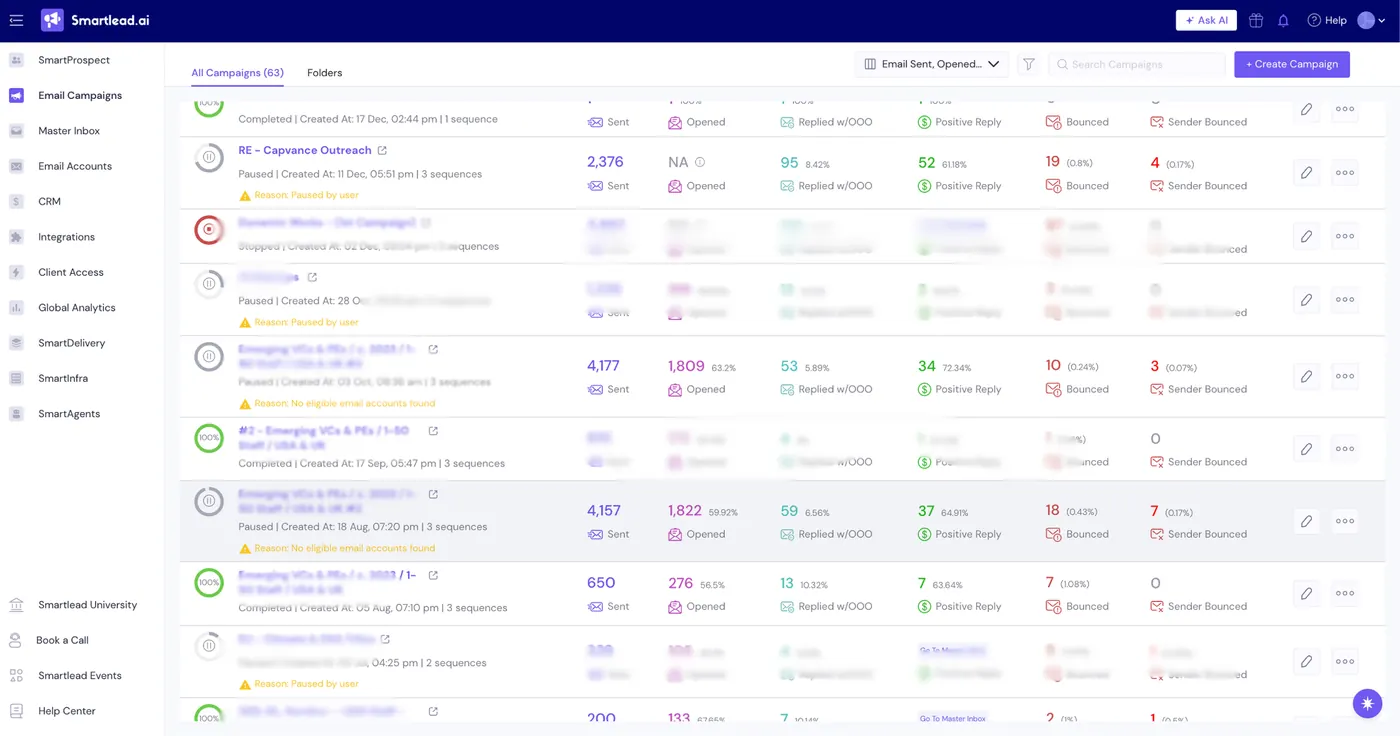
- The flagship campaign: 2,376 emails sent, 95 replies (8.42%), 52 of them positive, with bounces under 1%.
- The volume campaigns went past 4,000 sends each and still got 6-10% reply rates.
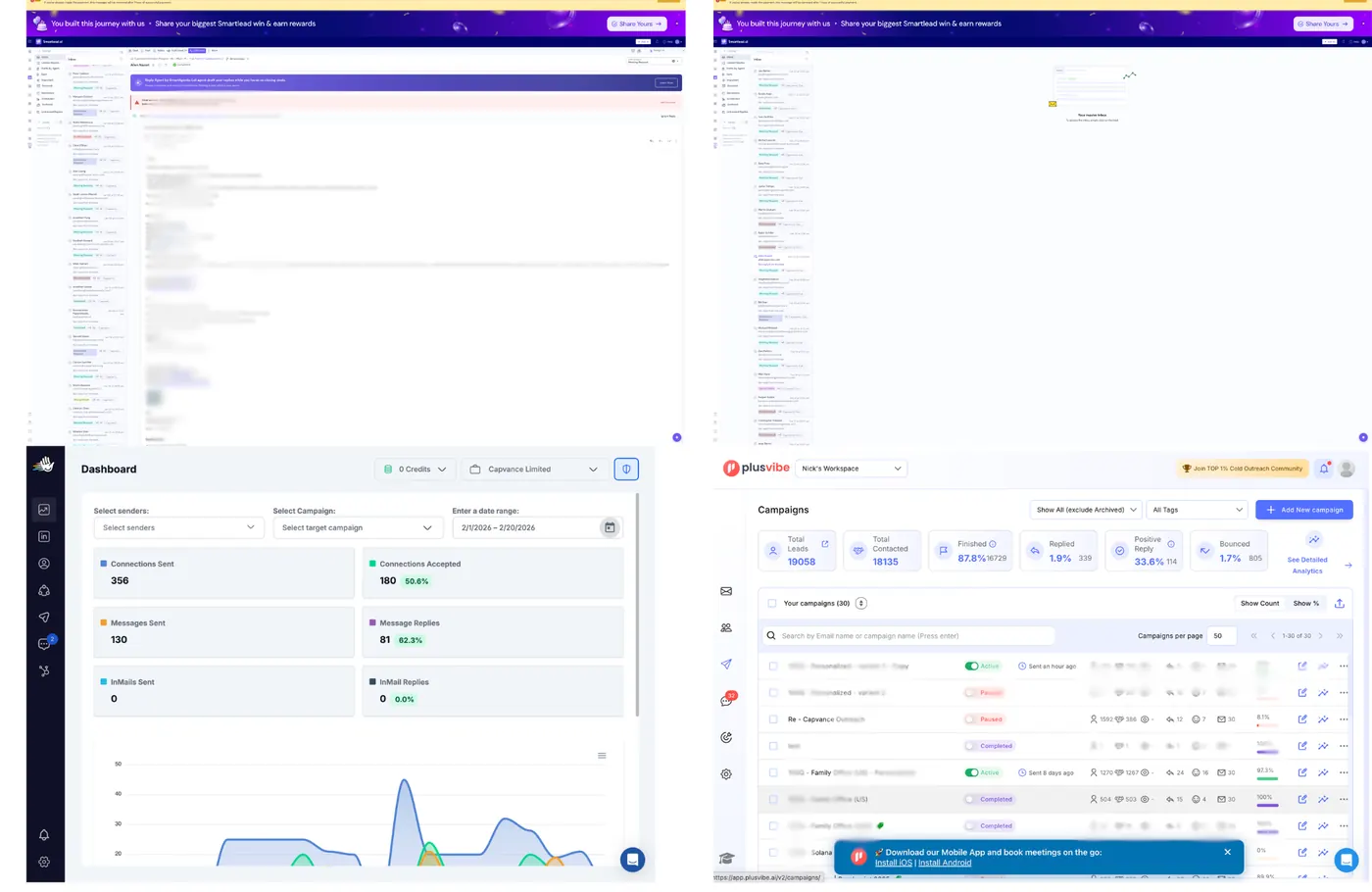
- On LinkedIn: 356 connection requests through HeyReach, 51% accepted, and 62% of the messages got a reply.
- PlusVibe: over 18,000 leads contacted at a 1.7% bounce rate.
- The team kept opening the dashboards every day, and I documented the scoring model so it kept running after I left.